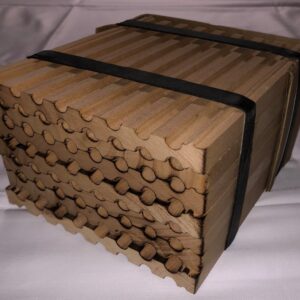


Mason Bee Cocoons (Osmia Lignaria) are for shipments East of the Rocky Mountains and are sometimes referred to as blue orchard mason bees.
- Store cocoons in a cool place that will stay below 50F
- Set packs out in attic of mason bee chalet house as soon as spring weather has started and the first plant blooms appear (typically March 1).
- One pack of 20 Eastern Mason Bees / blue orchard mason bees will pollinate about 2-3 orchard trees or early blooming crops.
- Includes Loose Cell Mason Bee cocoons in an introduction cardboard box.
- Typical sex ratio = males x 6 & females x 4 per 10 cocoons, subject to bee variability beyond our control
- Make sure you have clayey mud available for the mason bees to build the dividers / caps in their nesting tubes.
- Optional humidity box available.
Several size packs of Blue Orchard Mason Bees cocoons (Osmia Lignaria) are available. You typically should have around a 1:1 cocoon to nesting reed / nesting block hole ratio or less. Example a 50 pack of cocoons would be appropriate for a 48 hole nesting block. You could go with a smaller cocoon quantity but the bees may not fill all the nesting spots by the end of their season.
For bees that perform pollinating tasks during the summer look into leafcutter bees as they handle pollination of garden and later season fruits from early summer into late summer.
NOTE: Due to the migration of the West coast mason bees to the East coast we are no longer able to guarantee you will receive 100% blue orchard mason bees (Osmia Lignaria) in your cocoon packs. There is a slight chance you will receive a few horn faced mason bee cocoons (osmia cornifrons) OR red mason bee cocoons (osmia bicornis). It is almost impossible for us to cull these cocoons from the blue orchard nesting tubes during harvesting as they appear almost identical to each other. These mason varieties are very good pollinators and work along side the blue orchard mason bees.
Mason Bee Cocoons (Osmia Lignaria)
Mason Bee Cocoons (Osmia Lignaria) for Sale
Mason Bee Cocoons (Osmia Lignaria) are for shipments East of the Rocky Mountains and are sometimes referred to as blue orchard mason bees. Includes Loose Cell Mason Bee cocoons in an introduction cardboard box.
What to Expect When Mason Bee Cocoons Emerge
As spring temperatures rise and local weather turns suitable, your mason bee cocoons will begin to emerge.
- Newly emerged bees leave to explore, looking for forage and mates. Unlike honey bee colonies with queen bees and other colony members, mason bees are solitary and manage their own nests.
- Active bees visiting flowers and visible mud around nesting holes suggest normal nesting activity.
- Females collect pollen and mud to create nest cells and lay eggs.
For bees that perform pollinating tasks during the summer look into leafcutter bees as they handle pollination of garden and later season fruits from early summer into late summer.
NOTE: Due to the migration of the West coast mason bees to the East coast we are no longer able to guarantee you will receive 100% blue orchard mason bees (Osmia Lignaria) in your cocoon packs. There is a slight chance you will receive a few horn faced mason bee cocoons (osmia cornifrons) OR red mason bee cocoons (osmia bicornis). It is almost impossible for us to cull these cocoons from the blue orchard nesting tubes during harvesting as they appear almost identical to each other. These mason varieties are very good pollinators and work along side the blue orchard mason bees.
Support spring pollination with mason bee cocoons at Meyer Bees. Shop now or contact us for expert beekeeping advice.
Frequently Asked Questions
Do mason bees make honey?
No. Mason bees are solitary bees rather than honey-producing colony bees. Each female builds and provisions her own nest instead of contributing to shared honey stores.
Can mason bees live near honey bees?
Yes. Mason bees can be kept near honey bees because they have different nesting habits. Both may contribute to pollination during spring.
When should I put my mason bee cocoons outside?
Set them out in the attic of your mason bee house once spring weather starts and the first plants bloom, typically around March 1. Until then, store the cocoons somewhere cool that stays below 50°F.
How many cocoons do I need?
Aim for about one cocoon per nesting reed or block hole, or fewer. For example, a 40-pack suits a 48-hole nesting block. A pack of 20 will pollinate about 2-3 orchard trees or early-blooming crops. Packs come in 20, 40, and 100 sizes. Typical sex ratio in pack = males x 6 & females x 4 per 10 cocoons, subject to bee variability beyond our control.
What else do mason bees need to nest?
Mason bees need clayey mud nearby to build the dividers and caps inside their nesting tubes. You’ll also need a nesting block or reeds and a mason bee house to hold them. We also offer a humidity box as an option.