
Raw Local Honey
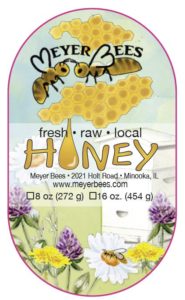
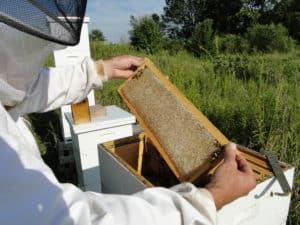
Meyer Bees’ beekeeping and honey production process involves monitoring the hives to add honey supers at appropriate times to maximize local honey while still allowing the bees to build up sufficient honey for themselves to survive Chicago, Illinois winters. Purchase our raw local wildflower honey online by clicking here or stop by our store in Minooka IL to pick it up.
Honey Extracting
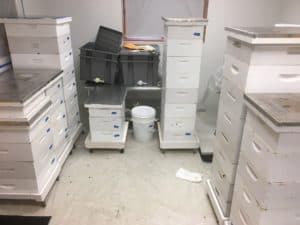
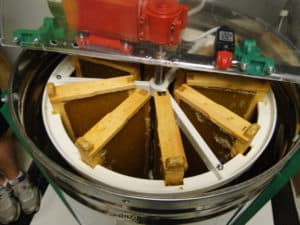
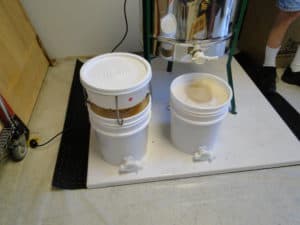
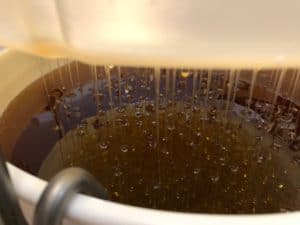
Once the bees have capped the frames in a honey super, the frames are harvested and are transported back to our honey extraction room. When beekeeping and honey extracting, we remove the cappings and put the frames into an extractor which spins the frames at high speed. The honey is flung out of the cells and exits the extractor where it runs through a mesh screen. The screen removes large wax shavings from the cappings and miscellaneous debris from the honey. The screen allows all the good stuff (pollen, nutrients, enzymes, etc.) through while removing undesirables.
We harvest honey and perform separate honey extraction several times a season and each batch will have a slightly different flavor/color based on the nectar sources available at the time. Wax cappings are also saved for use in other products such as candles, lip balm, etc.
Get 100% Raw Honey from Meyer Bees
At no point do we alter our honey in any way – we do NOT pasteurize or blend our honey with other products. Our honey is 100% raw honey. Try purchasing raw honey at different times of the year to experience the various flavors.
To purchase honey, call us at 815-521-9116 or email [email protected] or order online by clicking here.
Honey Bottling
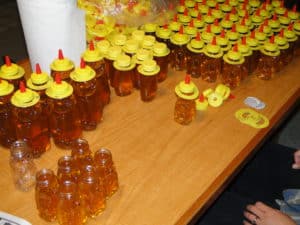
We stock a variety of different glass and plastic bottles and can custom package up our local honey to meet your needs. Weddings, gift baskets, special occasions and events are just a few ideas where honey is a good choice.
Custom Honey Extraction Services
At Meyer Bees, our custom extraction services help local beekeepers process their harvest efficiently without purchasing expensive equipment. Harvesting raw local honey in Northern Illinois relies on understanding distinct seasonal nectar flows.
- Spring & Early Summer – Bees forage on white clover and fruit blossoms, producing light, sweet honey.
- Late Summer & Fall – Nectar from goldenrod and aster creates dark honey with robust floral notes.
Preparing Frames for Extraction
Frames brought in for extraction must meet specific guidelines to maintain honey purity.
- Capped cells indicate bees reduced moisture below 18%, which prevents honey from fermenting.
- Frames must be completely free of brood and recent chemical pest treatments.
- We spin frames gently without high heat, leaving natural pollen and enzymes intact without fine-filtering.
Supporting Healthy Hive Yields
Sustaining productive colonies throughout the season requires genetic stock adapted to Midwest weather. Strong worker populations raised by northern-acclimated queen bees forage efficiently across local flora. If you are starting fresh with overwintered bee nucs or building up established hives, proper colony care directly impacts your final harvest volume. Custom bottling into various glass or plastic containers is also available for event favors or personal gifts.
Call our showroom at 815-521-9116 or visit our Minooka store to schedule extraction services and review drop-off requirements.
Our Honey Apiaries
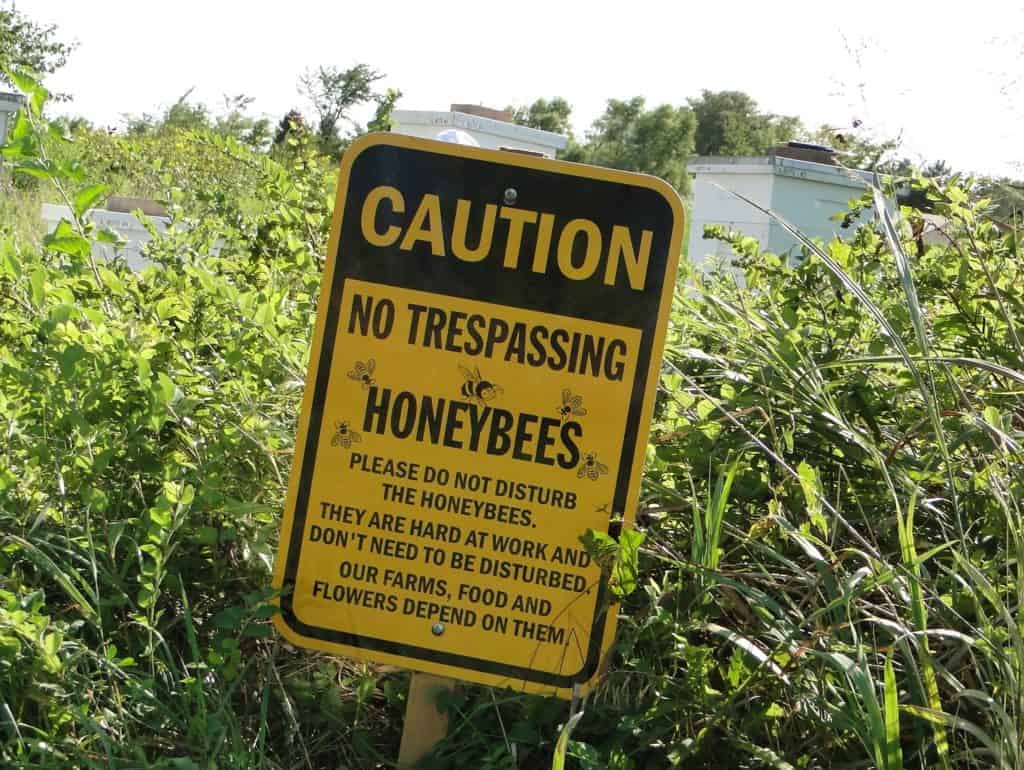
Meyer Bees manages hives and local honey production at multiple sites (called apiaries) in the Chicagoland area. We have apiaries in Minooka, Illinois, as well as many surrounding cities including: Plainfield, Joliet, Downers Grove, Homer Glen, Oswego, Newark, Shorewood, Morris and Lockport.
Varietal Honey From Across the USA
We are working with a handful of other beekeepers across North America and have located some that produce unique monofloral varieties of honey. These varieties are created when the bees forage primarily on one nectar source for an extended period of time. It takes a bit of extra work for the beekeeper and the honey supers must be installed when the nectar flow begins and then removed promptly as the nectar flow ends. This ensures that only the desired floral variety contributed to the honey flavor.
In the Minooka IL area where our colonies are located we typically do not have enough of any one flower variety to produce mono varieties so instead our local honey is considered a wildflower mix.
We currently have the following varietal honey available in our Minooka IL showroom. Honey can also be shipped. (limited supply on some varieties):
- Agave Blossom Honey

- Alfalfa Blossom Honey
- Avocado Blossom Honey
- Blackberry Blossom Honey
- Blueberry Blossom Honey
- Buckwheat Blossom Honey
- Clover Blossom Honey
- Cranberry Blossom Honey
- Eucalyptus Blossom Honey
- Fireweed Blossom Honey
- Mesquite Blossom Honey
- Orange Blossom Honey
- Star Thistle Blossom Honey
- Tupelo Blossom Honey
- Wildflower Honey (local)

Bee Pollen
We occasionally harvest local bee pollen from our colonies when the bees are actively collecting it. It is important to not collect too much or you can set the hive back. The pollen is cleaned and then packaged. We currently have local bee pollen available in our Minooka IL showroom. Pollen bottles can also be shipped (limited availability as pollen is seasonal).
Manuka Honey vs Minooka Honey
We sometimes get asked for Minooka honey and what customers really mean is that they want Manuka honey. So just to clarify:
- Minooka Honey is available in our shop and is from our apiaries in Minooka, IL
- Manuka Honey is available in our shop and is a monofloral honey produced from the nectar of the mānuka tree, Leptospermum scoparium. The honey is commonly sold as an alternative medicine. The mānuka tree is found primarily in New Zeland and Australia.
Frequently Asked Questions
Why does raw honey crystallize, and how can it be softened?
Crystallization is a natural trait of pure honey. It happens when glucose naturally separates from water and forms crystals over time. This process shows the honey was never overheated or fine-filtered. To return it to a liquid state, set the sealed jar in a warm water bath around 105°F until the crystals melt. Do not use a microwave, because high temperatures destroy natural enzymes.
What is the difference between spring and fall wildflower honey?
The color and flavor of wildflower honey depend on the blossoms available when bees gather nectar. Spring honey comes from early flowers like clover and fruit trees, creating a golden color and light flavor. Fall honey comes from late-season plants like goldenrod, creating a dark amber color and bold taste.
What are the requirements for dropping off honey supers for custom extraction?
Frames submitted for custom extraction must have at least 80% capped honey cells to guarantee correct moisture levels. Supers must be free of brood, living bees, and chemical residues from active pest treatments. Clean frames ensure efficient processing for everyone.
How much honey can a healthy beehive produce in one season?
An established, healthy hive in Chicagoland produces 40 to 100 pounds of surplus honey during a good nectar flow. Beekeepers leave 60 to 80 pounds of honey in the hive so the colony survives the winter.
<script type="application/ld+json">
{
  "@context": "https://schema.org",
  "@type": "FAQPage",
  "mainEntity": [
    {
      "@type": "Question",
      "name": "Why does raw honey crystallize, and how can it be softened?",
      "acceptedAnswer": {
        "@type": "Answer",
        "text": "Crystallization is a natural trait of pure honey. It happens when glucose naturally separates from water and forms crystals over time. This process shows the honey was never overheated or fine-filtered. To return it to a liquid state, set the sealed jar in a warm water bath around 105°F until the crystals melt. Do not use a microwave, because high temperatures destroy natural enzymes."
      }
    },
    {
      "@type": "Question",
      "name": "What is the difference between spring and fall wildflower honey?",
      "acceptedAnswer": {
        "@type": "Answer",
        "text": "The color and flavor of wildflower honey depend on the blossoms available when bees gather nectar. Spring honey comes from early flowers like clover and fruit trees, creating a golden color and light flavor. Fall honey comes from late-season plants like goldenrod, creating a dark amber color and bold taste."
      }
    },
    {
      "@type": "Question",
      "name": "What are the requirements for dropping off honey supers for custom extraction?",
      "acceptedAnswer": {
        "@type": "Answer",
        "text": "Frames submitted for custom extraction must have at least 80% capped honey cells to guarantee correct moisture levels. Supers must be free of brood, living bees, and chemical residues from active pest treatments. Clean frames ensure efficient processing for everyone."
      }
    },
    {
      "@type": "Question",
      "name": "How much honey can a healthy beehive produce in one season?",
      "acceptedAnswer": {
        "@type": "Answer",
        "text": "An established, healthy hive in Chicagoland produces 40 to 100 pounds of surplus honey during a good nectar flow. Beekeepers leave 60 to 80 pounds of honey in the hive so the colony survives the winter."
      }
    }
  ]
}
</script>